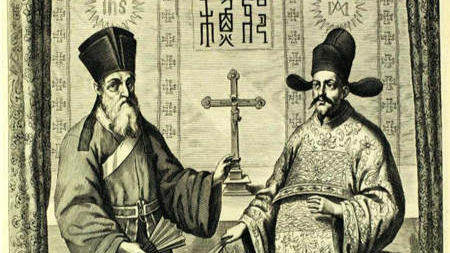
Xu Guangqi
徐光启
- 分类: 文明交流
- ID: 1862054762282594305
Home CategoryCultural ExchangeXu GuangqiPlay3 minsXu Guangqi, born on April 24, 1562, in Shanghai, was a distinguished Chinese scholar and official during the Ming Dynasty (1368-1644). Rising from modest beginnings, he excelled in classical Chinese studies and passed the imperial examinations, leading to a civil service career. Xu was committed to Confucian principles and collaborated with Jesuit missionaries, reflecting his interest in both traditional and practical knowledge.ShareCatalogue1. Early Life and Background2. Collaboration with Matteo Ricci3. Scientific Contributions and Legacy4. Impact on Sino-Western Relations
Early Life and Background
Xu Guangqi was born in 1562 in Shanghai, China. He came from a modest family, yet his exceptional intellect led him to excel in classical Chinese studies. As a young man, Xu passed the rigorous imperial examinations, which paved his way into the civil service. His early career was marked by his dedication to Confucian principles, and he eventually held several prominent governmental positions during the Ming Dynasty (1368-1644). Xu's intellectual pursuits were not limited to Confucianism; he was also deeply interested in practical knowledge, which later facilitated his collaboration with Jesuit missionaries.
Collaboration with Matteo Ricci
Xu Guangqi's encounter with Matteo Ricci, an Italian Jesuit missionary, marked a turning point in his life. Ricci arrived in China around 1582 and made significant inroads with the Chinese elite, including Xu. The two formed a lasting friendship that was characterized by mutual respect and intellectual collaboration. Xu and Ricci worked together on translating Western scientific texts into Chinese, most notably the first six books of Euclid's "Elements". This work was groundbreaking as it introduced Western mathematical knowledge to China, providing a new perspective on scientific inquiry during the Ming Dynasty.
Scientific Contributions and Legacy
Xu Guangqi's contributions to science extended beyond his work with Ricci. As a scholar, he was instrumental in the introduction of Western agricultural techniques and the promotion of scientific methods in China. Xu was involved in various governmental projects, including water conservancy and agricultural reform, which demonstrated his commitment to applying scientific principles for practical benefits. His efforts to integrate Western and Chinese knowledge helped lay the groundwork for future scientific advancements in China.
Impact on Sino-Western Relations
The collaboration between Xu Guangqi and Matteo Ricci had lasting implications for Sino-Western relations. Their work exemplified the potential for intellectual exchange between China and the West, challenging the prevailing Eurocentric narratives of the time. Xu's openness to foreign ideas and his ability to bridge cultural gaps made him a key figure in the history of cross-cultural interaction. His legacy is evident in the ongoing dialogue between Eastern and Western cultures, particularly in the realms of science and religion. Article reference1. When the men of Confucius met the men of Jesus. chinadaily.com.cn. 20182. On his majesty's service, and at his mercy. chinadaily.com.cn. 2017Photo Gallery(3 pictures)CategoriesCultural ExchangeTagCultural EnvoyRelatedMatteo RicciCatalogue1. Early Life and Background2. Collaboration with Matteo Ricci3. Scientific Contributions and Legacy4. Impact on Sino-Western Relations- - - []








